The classic coming-of-age film ‘American Graffiti’ hit theaters in August 1973 and forever changed the landscape of movies.
By Bob Tremblay/Boston Movie News
What’s the most significant film ever produced? I suppose that depends on your definition of “significant.”
If by significant, you mean a film that garnered acclaim from critics and the public, became one of the most profitable films in cinematic history, was nominated for five Academy Awards, including Best Picture, launched several careers, ignited a nostalgia industry, and paved the way for blockbuster films, “American Graffiti” might deserve consideration.
Released 50 years ago this month, “American Graffiti” registered all these accomplishments with a cast of virtual unknowns and a director whose first film was a financial flop. “Graffiti” was rejected by every major studio until Universal Pictures picked it up and who knows what the fate of the film would have been if Francis Ford Coppola, fresh off the success of “The Godfather,” hadn’t signed on as producer?
The story goes that Coppola suggested to the director, a fellow named George Lucas, to write a coming-of-age story. So he did, about his life growing up in the early 1960s in California where the cruise culture was king. He would model characters in the movie on aspects of his personality.
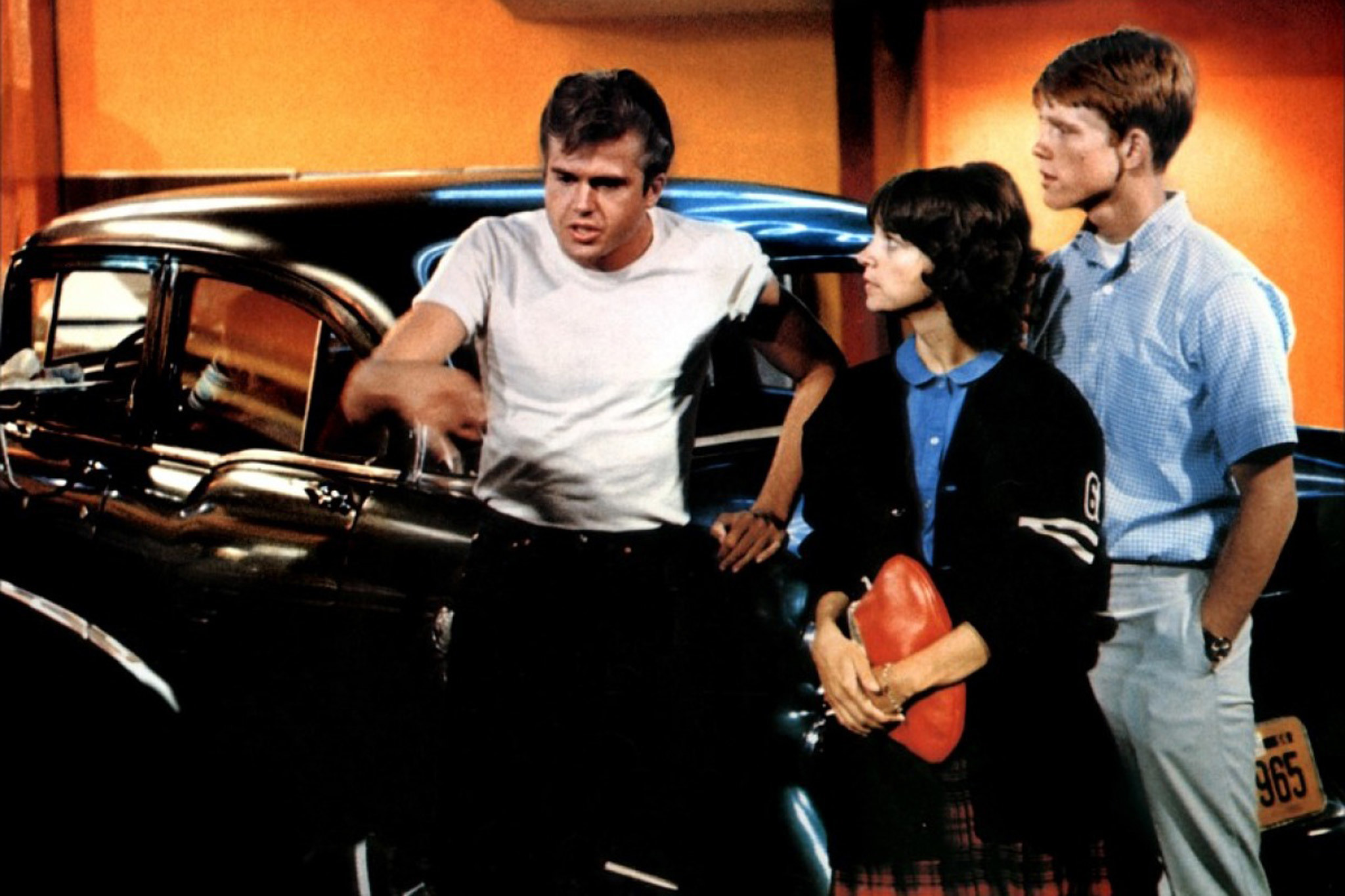
The film follows the adventures of a group of teenagers in 1962 during the course of one night. Relationships, both serious and comical, get portrayed, and major life decisions have to be sorted out as classic rock songs play in the background. Along with “Easy Rider,” “Graffiti” was one of the first films to incorporate rock songs instead of a traditional film score.
Produced on a $770,000 budget, “American Graffiti” grossed $115 million, the third highest that year behind “The Exorcist” ($193 million) and “The Sting” ($159 million). In addition to Best Picture, it was nominated for Best Director, Best Screenplay (Lucas, Gloria Katz, and Willard Huyck), Best Editing (Verna Fields and Marcia Lucas), and Best Supporting Actress (Candy Clark). The first four awards went to “The Sting,” the latter to Tatum O’Neal for “Paper Moon.” In 1995, “American Graffiti” was selected for preservation in the National Film Registry.
Its success led to an alteration of the cinematic and cultural landscape worldwide. The cast made its own impact on film and television. Here’s a look at the players.
George Lucas, director
Lucas used the profits from “American Graffiti” to make a little film called “Star Wars.” If “American Graffiti” had not been successful, would Lucas have been able to make “Star Wars”? Let’s just say he may have needed more than The Force to be with him. With Steven Spielberg, Lucas also created the Indiana Jones movies. Along with “Jaws,” the “Star Wars” and “Indiana Jones” films altered the cinematic and cultural landscape. For better or worse, blockbuster films were here to stay along with all the related merchandising and theme park rides. Lucas has become one of the most financially successful filmmakers in the biz, and it all began with “One, two, three o’clock, four o’clock, rock.”
Ron Howard, actor/director, played Steve Bolander
Billed as Ronny Howard, he was the only cast member whom audiences might have been familiar with thanks to his childhood acting days, especially as Opie on “The Andy Griffith Show.” But his acting career as an adult wasn’t exactly in high gear until “American Graffiti.” He followed that success by starring in the long-running TV show “Happy Days.” While the show, set in the 1950s, had already been in production, the success of “American Graffiti” convinced ABC to give “Happy Days” a shot, so the story goes. Capitalizing on nostalgia proved profitable for the network. After leaving “Happy Days,” Howard turned to directing, helming such films as “Night Shift,” “Splash,” “Cocoon” and “Apollo 13.” He would win the Academy Award for Best Director for “A Beautiful Mind.” Howard would agree it’s been a long red carpet ride from Mayberry.

Harrison Ford, actor, played Bob Falfa
Now a film icon, Ford had become so disillusioned with his lackluster acting career that he taught himself carpentry and worked as a professional carpenter to support his family. One of his customers was Fred Roos, casting director for “American Graffiti,” who secured him an audition with Lucas. The role of Bob Falfa was not a large one, but obviously, Lucas liked what he saw. He would cast him as Han Solo in “Star Wars.” Ford would later be cast as Indiana Jones, star in the Jack Ryan franchise and “Blade Runner,” and receive an Oscar nomination for “Witness.” His films have grossed more than $9 billion worldwide. Would other actors have been as memorable as Ford in these films? Maybe, maybe not. I don’t think he loses much sleep worrying about that. Can we also assume he has put away his toolkit?
Richard Dreyfuss, actor, played Curt Henderson
Dreyfuss received top billing in the opening credits, likely based on the fact that he received the most screen time. It certainly wasn’t because he was a star. Prior to American Graffiti,” his biggest claim to film fame was a cameo in “The Graduate,” where he says one line: “Shall I get the cops? I’ll get the cops.” After “American Graffiti,” Dreyfuss starred in “The Apprenticeship of Duddy Kravitz” and then scored a blockbuster two-fer with roles in “Jaws” and “Close Encounters of the Third Kind.” He then won the Best Actor Oscar for “The Goodbye Girl” and was later nominated for Best Actor for “Mr. Holland’s Opus.” The Moose Lodge would be proud.
Cindy Williams, actress, played Laurie Henderson
“Graffiti” also gave Williams’ career a boost toward stardom. After appearing in “The Conversation,” she played Shirley Feeney on “Happy Days,” a role that was enlarged in a highly successful spin-off, “Laverne & Shirley.” It would become the most-watched American TV program by its third season. Other spin-offs from “Happy Days” included “Joanie Loves Chachi” and “Mork & Mindy.” The latter introduced TV audiences to Robin Williams.
Charles Martin Smith, actor/director, played Terry Fields, aka Terry the Toad, aka Terry the Tiger
Smith’s roles before “American Graffiti” were far from memorable. On the other hand, his scenes with Clark in “Graffiti” are some of the film’s most memorable, certainly the most comical. Subsequent roles included “Never Cry Wolf” and “The Untouchables.” Like Howard, he ventured into directing with a resume that features “Air Bud,” “The Snow Walker” and “Dolphin Tale.”
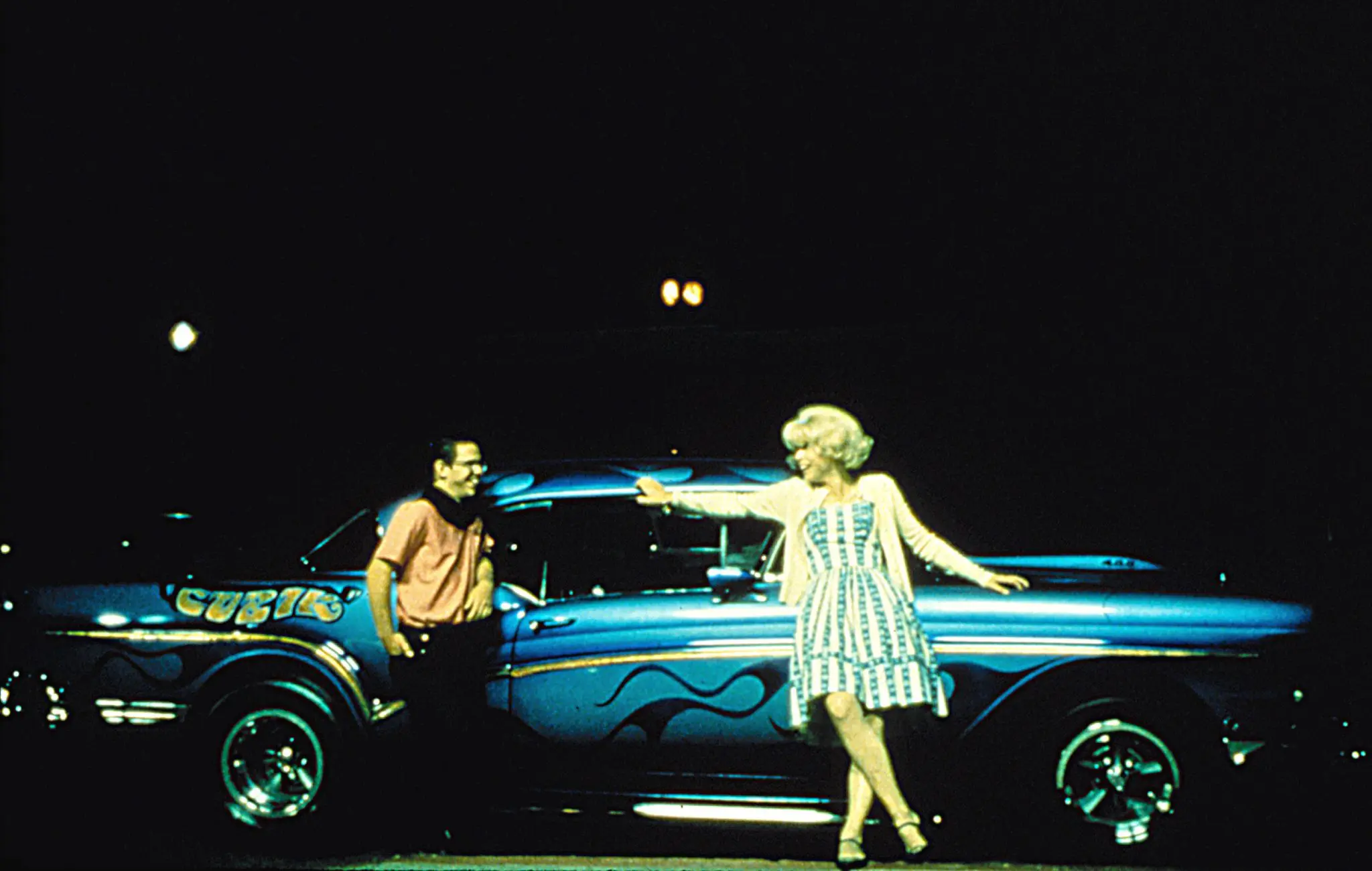
Candy Clark, actress, played Debbie Dunham
Following her film debut in “Fat City,” Clark made a much bigger impression in “American Graffiti,” earning an Academy Award nomination as Best Supporting Actress. It can be argued that O’Neal should have been nominated for Best Actress since she’s in nearly every scene of “Paper Moon.” If that had been the case, Clark would have had a much better chance of winning. The other nominees were Linda Blair (“The Exorcist”), Madeline Kahn (“Paper Moon”), and Syvlia Sidney (“Summer Wishes, Winter Dreams”). Clark also starred in “The Man Who Fell to Earth.”
Paul Le Mat, actor, played John Milner
Le Mat made his big screen debut in “American Graffiti,” winning the Golden Globe for Most Promising Newcomer. His scenes with Mackenzie Phillips rate as some of the film’s finest. Google “Carol & John Junk Wrecking yard scene” for an example. Le Mat would later win another Globe Globe, this time as Best Supporting Actor for the TV movie “The Burning Bed” and receive a Golden Globe best actor nomination for “Melvin and Howard,” a film that won two Academy Awards.
Mackenzie Phillips, actress, played Carol Morrison
Like Le Mat, Phillips made her film debut in “American Graffiti.” The daughter of John Phillips, of Mamas and the Papas fame, she was 12 during the filming. She gained more recognition on the long-running TV show “One Day at a Time.” She also battled drug addiction. Later she appeared on episodes of “Orange is the New Black.”
Suzanne Somers, actress, played the Blonde in the White Thunderbird
Somers garnered her first credited film role in “American Graffiti.” She does more driving than talking in the movie. She got more say starring in the TV show “Three’s Company.”
Other notable performances in “American Graffiti” come from Wolfman Jack and Bo Hopkins. Kathleen Quinlan, who also received her first credited film role in “American Graffiti,” would later earn an Academy Award nomination for Best Supporting Actress in “Apollo 13.”
As for the film’s title, Universal disliked “American Graffiti,” not knowing what it meant. Alternate suggestions included “Another Slow Night in Modesto” and “Rock Around the Block.” Lucas didn’t like alternatives and persuaded the studio to keep “American Graffiti.” So what does the title mean? Plenty of explanations exist. I like the one that notes graffiti typically involves young artists literally making their mark much as the characters in the film make their mark at a time before assassinations and Vietnam changed the face of America.
The less said about the film’s sequel, “More American Graffiti,” the better.
Happy 50th birthday, “AG”!
“American Graffiti” is available to rent via video on demand and is streaming on Netflix.
Bob Tremblay is a member of the Boston Society of Film Critics and the former film critic for the MetroWest Daily News.
 Boston Movie News