A pair of new foreign-language films, ‘Monster’ and ‘Society of the Snow,’ both tell different kinds of survival stories.
By Al Alexander/Boston Movie News
Amid all the Oscar hopefuls and holiday blockbusters, some smaller foreign-language films can fall off the radar. So, to help prevent that from happening, here are two such movies, beginning with:
MONSTER: Hirokazu Kore-eda has arguably been Japan’s most successful filmmaker of the new millennia, scoring high praise and solid box office for such gems as “Shoplifters,” “After the Storm” and last year’s “Brokers.” Thankfully, there is no letting up, as evidenced by his latest (playing at AMC Boston Common), which borrows structurally from fellow countryman Akira Kurosawa’s masterpiece, “Rashomon.” It lacks some of the bite and gravitas of Kore-eda’s earlier films, likely because he farms his usual writing duties out to Yuji Sakamoto. But I can’t deny that “Monster” packs a disorienting emotional punch.
The story revolves around four people: a widowed mother, her 11-year-old son, his bullied classmate, and a newbie elementary school teacher who you’re initially led to believe is the movie’s title character. But don’t acquiesce to that assumption; your perceptions and loyalties are sure to evolve as the film progresses. Like “Rashomon,” Kore-eda presents the same story from multiple perspectives, beginning with Saori, played poignantly by “Shoplifters” scene-stealer Sakura Ando.
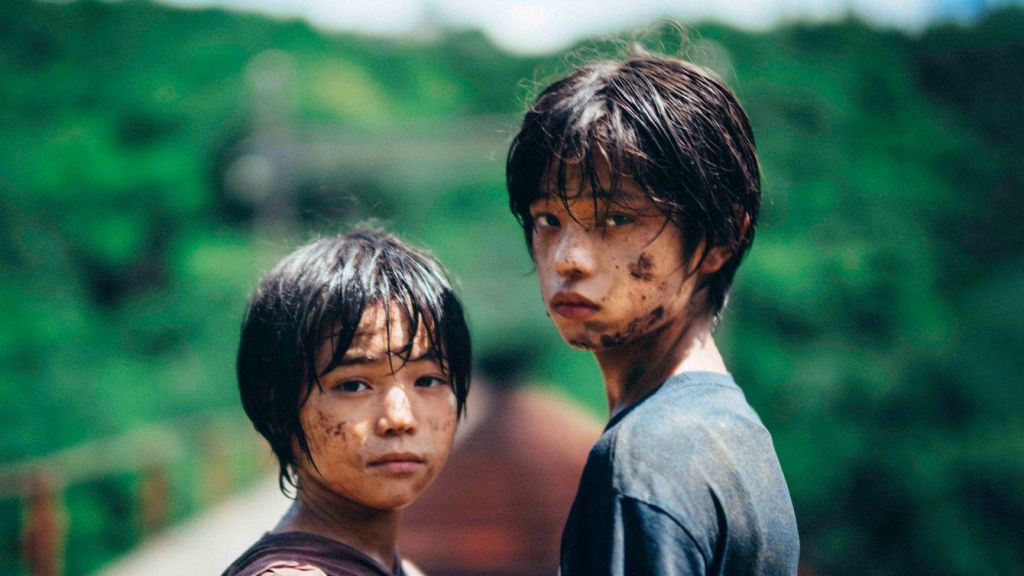
Recently widowed, she struggles to raise her fifth-grader son, Minato (the wonderfully expressive Soya Kurakowa), while toiling at a neighborhood dry cleaner. One night Minato returns from school with his nose swollen and his left ear bleeding. He tells Mom his injuries were inflicted by his new teacher, Mr. Hori (Eita Nagayama). But were they? He certainly appears guilty given what Saori gleens from sheepish school administrators who lavish her with phony apologies in hopes she will just go away.
The meetings Saori attends with Hori and his feeble bosses are laughable, particularly in how representative they are of teachers around the world, forced to walk on tiptoes so as not to risk offending their young charges. You’re as appalled as Saori by the administration’s spineless buck-passing demeanor. But hold on.
At around the 45-minute mark, the screen goes black, and the story starts all over again, beginning with a massive arson fire at a nearby high-rise. This time, we experience the events through Hori’s eyes, and they are quite different indeed, as the man’s life descends into chaos, and he is threatened with the loss of his reputation and possibly his sanity. Is he still the monster, if there is one at all?
Just wait, as the story unfolds a third time by virtue of Minato, who we discover has secretly befriended his smallest and most vulnerable classmate, Yori (Hinata Hiiragi). The mystery of why Minato refuses to recognize Yori at school is something Kore-eda keeps close to the vest until late in a much-debated third act. Ultimately, what does it all mean? I’m not saying, but have a tissue or two on hand as the heart-wrenching truth is finally revealed.
Yes, this is one of Kore-eda’s lesser works, but it still resonates, especially in its effective reflection of a world where conclusions are quickly jumped to, most often in error. And Kore-eda hauntingly depicts the dire consequences of these actions when allowed to escalate. It ultimately got to me, as did the marvelous score by the late Ryuichi Sakamoto, to whom the film is dedicated. If it is Kore-eda’s plea for us all to be a little kinder and more understanding, the message is received. (PG-13 for brief suggestive and thematic material; Grade: A-)
SOCIETY OF THE SNOW: I’ve never been a fan of writer-director J.A. Bayona (“The Impossible,” “A Monster Calls”), and this dull, belabored tale of survival of the fittest does nothing to alter that opinion.
If you were alive in the late autumn of 1972, you’ll likely recall the shocking news that some two dozen survivors of a plane crash in the snowbound Andes kept themselves alive for two months by dining on their deceased travel companions. It’s a tale that’s been told before, most notably in the 1993 hit “Alive.”
This version, penned by a swarm of writers, including Bayona, is a more accurate version of events that dispenses with the fabricated drama present in “Alive.” Normally, that would be a good thing. But not here, as an array of nondescript actors goes through the motions of debating the ethics of what to consume after the plane’s supply of snacks has depleted.
With a few exceptions, the group consists of male members of a national rugby team on its way to a tournament when the tricky Andes wind currents brought the plane down as if it were a toy. The event is thrillingly re-enacted via spectacular special effects showing both the plane and some of its passengers breaking up into pieces as they bounce wildly down the snow-covered slope like an out-of-control bobsled.
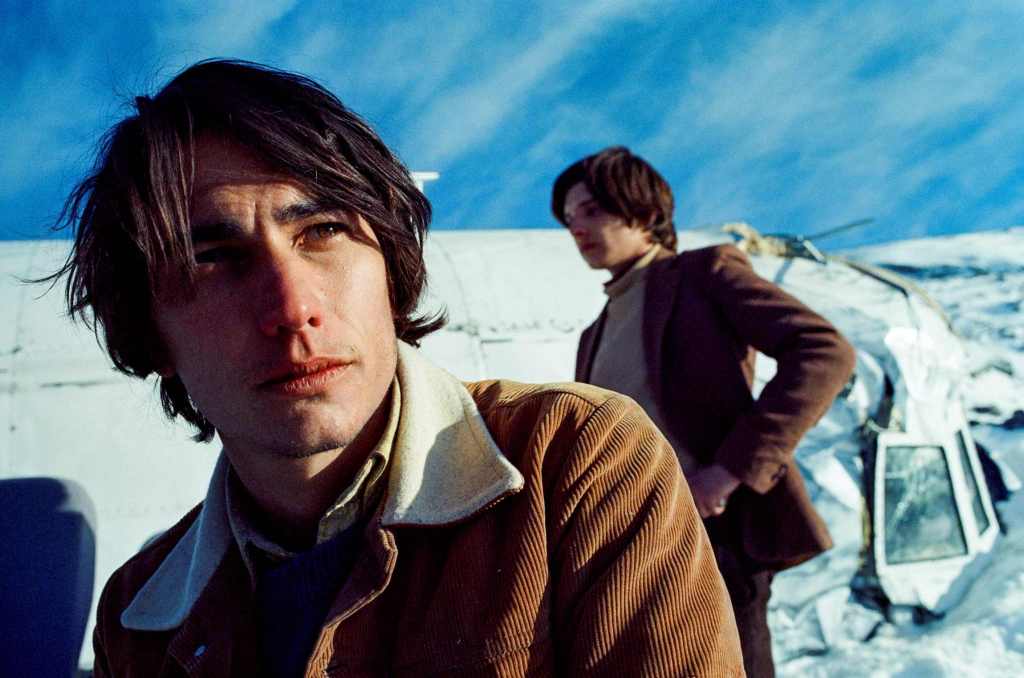
The problem with this Netflix production, which opens in theaters on Dec. 22 before streaming on Jan. 4, is that after the initial excitement, the film settles into a tedious, predictable slog that did not need to be 145 minutes long.
You feel every second of it as the ensemble of no-name actors fuss about doing what you’d expect: setting up a radio, making the most of what’s left of the fuselage, and contemplating whether God will curse them if they resort to eating one other. Not surprisingly, a few of them would rather starve.
There are elements of suspense, particularly when—adding insult to injury—their makeshift shelter is buried by an avalanche. But we already know going in that 16 of them will eventually be rescued.
Once they are choppered off the mountain, I expected the survivors to face a host of uncomfortable questions about their fight for survival and how it will continue to weigh on their consciences. Bayona just isn’t interested. Basically, the film ends just as it’s entering its most fascinating phase—the aftermath. Go figure. One thing is for sure, you won’t see this disaster offered as an inflight movie choice anytime soon. (R for brief graphic nudity, violent and disturbing material; Grade: C)
 Boston Movie News