David Hinton’s documentary explores how British filmmakers Powell and Pressburger shaped Martin Scorsese’s cinematic vision
By James Verniere/Boston Movie News
As a child in Manhattan’s postwar Little Italy neighborhood, young Martin Scorsese suffered from asthma and was forced to stay home, where he watched a lot of television. Because the American studios had not yet sold their films to TV, most of the films were British. Several of them were the work of Kent native Michael Powell and Hungarian Jew Emeric Pressburger. The latter was a screenwriter who had worked at the legendary German studio UFA before fleeing the Nazi scourge. Powell, the son of a farmer, got his start with silent film producer Rex Ingram at Victorine Studios in Nice, where he rose up the ranks. Back in England, Powell and Pressburger would be teamed up by producer Alexander Korda (“Things to Come”) on the 1939 thriller “The Spy in Black.” At about the same time, Powell had worked as one of the directors on the war-delayed Korda Technicolor extravaganza “The Thief of Bagdad” (1940) with Sabu as thief and the great Conrad Veidt as magician Jaffar.
Although young Scorsese, like many children of the period, watched these big screen efforts for the first time on small, black-and-white televisions, the power of the films to inspire awe and wonder was far from dimmed. Like Scorsese, I, too, watched these films on the New York-area TV program Million Dollar Movie, which aired them twice every night for a week and multiple times on the weekend.
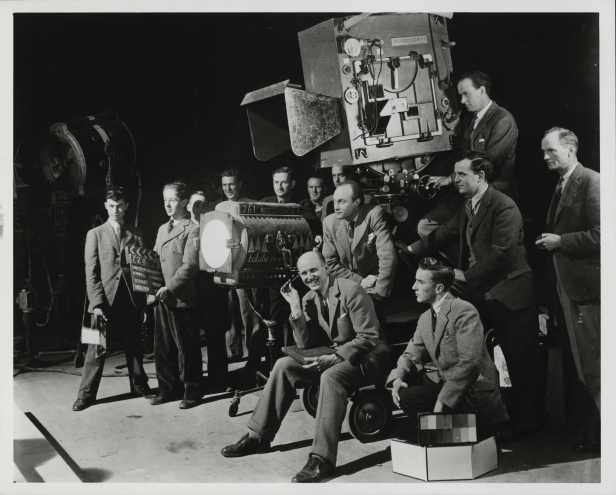
Directed by BAFTA-award winner David Hinton, who has made many documentaries about artists for British TV, “Made in England” is a personal exploration into how an aspiring artist might be influenced by exposure to the work of other artists and how aesthetic influence can transcend differences in age, nationality and even medium. Eventually, Scorsese would see the films of Powell and Pressburger as they were intended. Seated before Hinton’s camera, Scorsese talks about how those televised films (among them, “The Life and Death of Colonel Blimp,” 1943, “A Canterbury Tale,” 1944, “I Know Where I’m Going!” 1945, “A Matter of Life and Death.” 1946, “Black Narcissus,” 1947, “The Red Shoes,” 1948, and “The Tales of Hoffmann,”1951) helped form his “film subconscious.” Scorsese demonstrates this by using clips to make correlations between Powell and Pressburger’s work and such Scorsese classics as “Mean Streets,” “Taxi Driver,” “The Aviator” and many others.
After the hugely ambitious and successful “A Matter of Life and Death” aka “Stairway to Heaven” with David Niven and Kim Hunter, Powell and Pressburger, who called themselves and their production company “the Archers,” made the stunning “Black Narcissus,” a drama based on a 1939 novel by Rumer Godden set in a ruined mountainside palace in the Himalayas about a group of British nuns who work to bring Christianity to unbelievers. The film is noteworthy for being shot entirely on sound stages in England bedecked with brilliantly-shot painted-glass scenery by the great cinematographer Jack Cardiff and the performances of Deborah Kerr (who played all the protagonist’s love interests in “Colonel Blimp”), as the young Mother Superior; and Kathleen Byron as a young nun driven shockingly mad by lust. Of course, the Powell-Pressburger follow-up fantasia “The Red Shoes” (1948), which tells the Hans Anderson-based tale of a pair of cursed ballet shoes (the British film counterpart to Dorothy’s ruby slippers), gets lots of attention. We are reminded of how Powell could not make the film unless they could find a ballet dancer who could act. Enter ginger-haired danseur Moira Shearer, who would later appear in “The Tales of Hoffman” and Powell’s scandalous classic “Peeping Tom” (1960).
Scorsese reminds us of the ties between cinema and choreography. Every step must be plotted out, every mark hit. He also discusses Powell’s use of color, sound, and music. If you’re a film buff, “Made in England: The Films of Powell and Pressburger” is, indeed, a stairway to heaven.
‘Made in England: The Films of Powell and Pressburger’
Rating: Not rated, some violence.
Cast: Martin Scorsese, Michael Powell, Emeric Pressburger
Director: David Hinton
Writer: Hinton
Running Time: 2 hours, 11 minutes
Where to Watch: The Brattle
Grade: B+
 Boston Movie News