Despite a strong setup, ‘Armand’ unravels under the weight of its own ambiguity.
By Sarah G. Vincent/Boston Movie News
“Armand” (2024) is Norwegian director and writer Halfdan Ullmann Tøndel’s feature debut about the titular character, a 6-year-old who is the subject of a teacher-parents conference. With young teacher Sunna (Thea Lambrechts Vaulen) moderating, Elisabeth (Renate Reinsve) is the mother of the child in question, and she stands alone against Sarah (Ellen Dorrit Petersen) and Anders (Endre Hellestveit) as they levy accusations involving their son, Jon. As the day unfolds, the scale tips further in the couple’s direction. Tensions run high on a rainy summer day when everything does not go as expected as a community tries to determine the truth. Is this meeting about the children’s welfare or others’ agenda?
Even though “Armand” features a talented ensemble cast, Reinsve’s character feels like the protagonist because of the variety of ways that she makes her character stand out: her firm, loud footsteps echoing down an infinity corridor, her physical defiance and refusal to stay in her assigned space, her frayed, obvious nervousness, her elevated emotional outbursts that turn on a dime and her manner of adornment from clothes to accessories that make her stand out compared to teachers and fellow parents. She is like a gunslinger running out of bullets, realizing she can become prey. Is she minimizing the allegations to protect her son, or does she have a point?
In comparison, Sarah fits in better as the mother out for justice for her son and insists on backtracking the administrators’ efforts to be diplomatic. On the record, Anders acts as her backup but is not as enthusiastic and seems more thrilled to get a chance to see Elisabeth, even under unpleasant circumstances. While Anders is more tight-lipped in the meeting, in different environments, Tøndel uses his camera to reflect Anders’ point of view, and his eyes linger on his true motivation, which is not his son. Are they protecting their son, or is there another source of tension between the two families that makes them lean toward judgment instead of understanding and reconciliation?
Parent-teacher tensions
The teacher and faculty do not present a united front and are a bit of a disaster instead of seasoned professionals who are experts at handling conflict. Sunna has more experience with all the personalities, but her youth and gender make her vulnerable to more senior officials overriding her decisions. The principal, Jarle (Øystein Røger), and Ajsa (Vera Veljovic) are torn between not wanting to unnecessarily escalate the situation while simultaneously taking it seriously and being firm, but these conflicting goals undermine achieving them.
It is a countercultural character study that is relatively fresh, like a less sweeping “Anatomy of a Fall” (2023). Tøndel does not offer a lot of background before the characters are introduced so moviegoers will have a multitude of mysteries to solve. What were the relationships before this meeting? What tragedy did Elisabeth experience? Why does Elisabeth stand out? How far does this story go back? “Armand” answers all these questions, and the story is interesting until it is not and feels like it will never end.
Even if there is a method to the madness, some scenes go on too long and feel precious around the movie’s midpoint. Some hopefully-imagined dance sequences risk completely taking the viewer out of the experience and remembering that they are watching a movie that is constructed, not real. Even if it is deliberate, the message these dance scenes should convey is unclear. Also, it feels off when the first Black character onscreen later becomes the first dancer. A musical without multiple music numbers feels jarring, but Tøndel could be using the clamor of voices and breath as a diegetic, organic instrument.
When atmosphere overpowers the narrative
The external reflects the inner turmoil of the characters. A fire alarm blares. The air conditioner is broken and sparse. Every time tensions rise, a nosebleed erupts, offering an excuse to leave a meeting. In one hallway scene, in front of a wall of photographs, Tøndel even uses Dutch angles to indicate that a pivotal revelation will come. At some point, it feels more like a soap opera than a grand statement on society, unlike “The Teachers’ Lounge” (2023), which is far more compelling. If “Armand” was aiming for an overarching lesson, Tøndel seems less optimistic about community than Roman Polanski’s “Carnage” (2011).
That lesson is how every human being is cosplaying as if they have adjudicatory experience and are objective but are actually floundering with only unexamined fissures of hurt motivating them, and the most sensational aspects inspire a kneejerk reaction instead of sober deliberation. By the end, it feels like everyone traded places; up is down, and left is right. Even if it is rooted in the reality that the human experience is forever segregated from objective truth, the problem with ambiguity is that if it extends for too long, disengagement may happen before the credits roll. “Armand” hits the ground running and starts engrossing but as it delves deeper into surreal representations of emotion, it slackens and loses focus to the point of unraveling, like its characters. The tonal shift from revved up to languid reflects the heightened situation and feelings, but ending with a calm after the storm is a calculated risk that may not work for its audience.
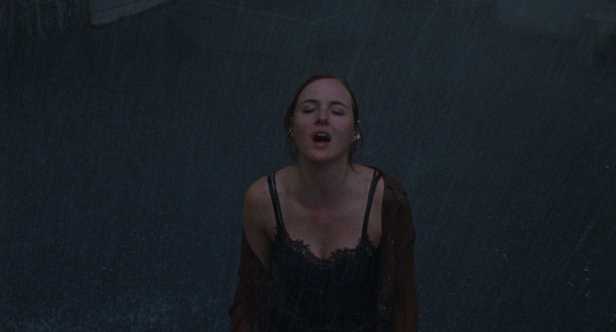
If Tøndel’s middle name sounds familiar to cinephiles, it should. He is the grandson of actor Liv Ullman and Swedish director Ingmar Bergman, but you would not notice a family resemblance if you did not know it. Tøndel is his own man who prefers form over structure. Any movie that tries to assert that the real societal victim is the person accused of abuse and turns it into a war between two women as if mean-girl dynamics were the foundation of community ills feels suspect. One scene resonates viscerally in a way that most of “Armand” does not. Sheltering from the rain symbolizes truth, and literally standing with that person renders a verdict of guilt or innocence.
If you go into “Armand” with measured expectations of a human drama, not a movie that is a microcosm of life in the 21st century, it should work, but if you are not a lover of artsy films with subtitles ready for the deconstructed second half that has more in common with abstract, experimental film than a conventional narrative, you should skip it or prepare to leave early without answers. Norway submitted “Armand” for the Best International Feature Film at the 97th Academy Awards. It did not make the final five, which seems right in a world where “I’m Still Here” exists, but in light of the “Emilia Perez” controversy, it could also seem wrong. If Tøndel could make the surreal compelling, maybe he would get a seat on the big night next time. The concept is not bad for a first-time filmmaker, but the execution is inflated.
‘Armand’
Rating: R for some language and sexual material.
Cast: Renate Reinsve, Ellen Dorrit Petersen, Endre Hellestveit
Director: Halfdan Ullmann Tøndel
Running time: 1 hour 57 minutes
Where to watch: In theaters February 7
Grade: B-
 Boston Movie News