From Bill Russell’s 11 rings to Boston’s banner No. 18, the ‘Celtics City’ documentary is a slam dunk for basketball fans.
By Bob Tremblay/Boston Movie News
An argument can be made that no city has spoiled its sports fans more than Boston.
For evidence, the city can lay claim to providing the playing venue for four GOATS (Greatest Of All Time) in the four major sports. In baseball, there’s Ted Williams of the Red Sox, the greatest hitter; in hockey, there’s Bobby Orr of the Bruins, the greatest, period—sorry, Wayne Gretzky fans; in football, there’s Tom Brady of the Patriots, the greatest quarterback; and in basketball, there’s Bill Russell of the Celtics, the greatest winner.
To see just how great a winner Russell was and what a championship franchise the Celtics became, watch the HBO Original nine-part documentary series “Celtics City.” It’s streaming on Max.
If you’re a Celtics fan, this series is hoop nirvana. And even if you don’t know Bob Cousy from Bob Hope, the series provides plenty of off-court stories and historical perspectives. Societal changes come into play as well.
Directed by Emmy Award-winner Lauren Stowell, the series chronicles the Celtics from the pre-Russell era, when Cousy was the star, to today’s team led by Jayson Tatum and Jaylen Brown. While Cousy was indeed great—highlights provide proof—the team didn’t start winning championships until Russell arrived.
After winning two championships at the University of San Francisco and an Olympic gold medal in 1956, Russell added to his career 11 championships in 13 seasons for the Celtics. He achieved this unprecedented feat from 1957 to 1969, including eight in a row. Not too shabby. The series also looks at Russell, the man, and what an amazing man he was. His profile alone is with the price of admission. Or whatever Max charges.
The series isn’t just about championship banners, though. It doesn’t shy away from Boston’s segregationist history and how Black Celtics players, including Russell, had to deal with racism. Ironically, the Celtics were the first team to draft a Black player, Chuck Cooper, the first team to start five Black players—Russell, K.C. Jones, Sam Jones, Tom Sanders, and Willie Naulls—and the first team to hire a Black coach—Russell.
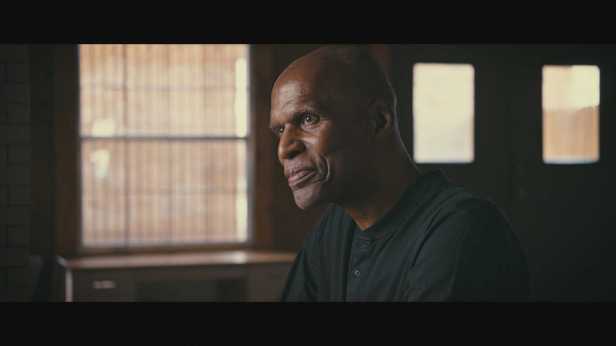
Each hour-long episode features plenty of archival footage—some of the never-been-seen variety—and more than 80 interviews, including players, coaches, executives, journalists, families, fans, and celebrities like Donnie Walberg and Bel Biv DeVoe. Most revealing, in my humble opinion, are the interviews with Robert Parrish, who kept a stoic demeanor on and off the court. He sure opens up here. Sorry, no spoilers on his revelations.
People less enamored with the Celtics, such as anyone associated with the Los Angeles Lakers, also have their say. OK, I believe the word “hate” gets mentioned. Lakers star James Worthy has a few choice words. You would, too, if you had to guard Larry Bird.
Those who doubt Bird’s greatness should have them removed after watching episodes featuring the hick from French Lick.
The series effortlessly weaves the present with the past, segueing from today’s Celtics, which won a record 18th championship last year, to past champions. These include the teams led by Dave Cowens, John Havlicek, Jo Jo White, and Paul Silas in the 1970s, Bird, Parrish, and Kevin McHale in the 1980s, and Paul Pierce, Kevin Garnett, and Ray Allen in the 2000s.
The connecting thread in the series is Red Auerbach, coach, executive, and the mastermind behind the Celtics dynasty. He put together one championship team after another through wise draft picks, shrewd trades, and a little bit of luck. For example, Cousy only ended up in Boston because Celtics owner Walter Brown pulled the guard’s name out of a hat. Take your pick of your favorite Red “swindle.” Of course, there’s the trade for Russell. I’ll go with jettisoning Joe Barry Carroll and getting Parrish and McHale in return. Auerbach’s victory cigars he lit quite a few—thrilled fans and annoyed opponents.
The rivalries with Philadelphia and Julius Erving, Los Angeles and Magic Johnson, Detroit and “Bad Boy” Bill Laimbeer, and Russell versus Wilt Chamberlain receive their due. It’s unlikely Celtics fans ever get tired of hearing announcer Johnny Most scream, “Havlicek stole the ball!”
The series also focuses on the years when the Celtics weren’t winning championships. Tragedies—the deaths of Len Bias and Reggie Lewis and the near-fatal stabbing of Pierce—poor decisions— such as choosing M.L. Carr and Rick Pitino as coaches—dubious player acquisitions—can we start with Curtis Rowe and Sidney Wicks?—and internal discord led to some lean years.
Full disclosure. The series preaches to the choir. I’ve been a Celtics fan since the Russell era—yes, I’m old—at a time when a Celtics ticket could be acquired easily and inexpensively. At the old Boston Garden, you just had to occasionally share space with a wayward rat. Even when the Celtics were winning championship after championship, Boston was a hockey town, thanks in great part to the presence of Mr. Orr. If I had one quibble, the series could have interviewed bench players like Hank Finkel. “Hank, what was it like to be a backup center to Russell and Cowens?”
“Celtics City” still rates as a winner. Have I used variations of the word “win” enough here? The reason is simple. As this series makes clear, winning and the Celtics have become synonymous.
“Celtics City” is streaming on Max. The next installment, episode 3, “All Swept Up,” airs at 9 p.m. March 17.
 Boston Movie News