‘Chain Reactions’ documentary delves into the aesthetic, cultural and artistic imprint of Tobe Hooper’s 1974 landmark film.
By James Verniere/Boston Movie News
Of the several documentaries made about Tobe Hooper’s 1974 sublimely grotesque American landmark “The Texas Chain Saw Massacre,” “Chain Reactions” is the first to address the effect the film had on young artists who saw it at an impressionable age. Brad Shellady’s 1988 “The Texas Chain Saw Massacre: A Family Portrait” examines the film from the point of view of its cast members. In 2000, “Texas Chain Saw Massacre: The Shocking Truth,” which was directed by prolific, self-described “film nerd” David Gregory, takes a broader view through the eyes of director Tobe Hooper, co-writer Kim Henkel, as well as art director Robert A. Burns and cinematographer Daniel Pearl, whose contributions to the film are enormous. “Chain Reactions,” directed by Alexandre O. Philippe (“Leap of Faith: William Friedkin on The Exorcist”), begins with a segment labeled Chapter One, featuring the keen observations of actor and superfan Patton Oswalt, the first of several admirers of the film to be interviewed. Their comments are accompanied by multiple, relevant clips from the film.
Oswalt, who amusingly relates how he was shown F.W. Murnau’s 1922 “Nosferatu: A Symphony of Horror,” at a birthday party as a child, reminds us of the many “moments of beauty” in a film that is known for its titular chainsaw, hammers, meat hook and horrible re-purposes for human skin, most notably as the face mask worn by a non-speaking, oddly-animated, cross-dressing murderer and butcher known as “Leatherface” (Reykjavik, Iceland-born Gunnar Hansen). Oswalt points out the many “’Days of Heaven’” shots, as he refers to them, in the film. “The Texas Chain Saw Massacre” may be a horror film. But its camera admires sunflowers, supple limbs, celestial bodies and landscapes. Oswalt also reminds us that, in addition to the human face worn by Leatherface, the lamp over the cannibal family’s dinner table, which trails strands of hair, is made from the sleepy visage of a woman.
Referred to in its opening credits as a “true story” (it is not), “The Texas Chain Saw Massacre,” like 1960’s “Psycho” before it, was inspired by the true story of Wisconsin farmer, handyman and mama’s boy Ed Gein, a serial killer who actually made a lampshade out of a woman’s face. Despite a relatively low level of on-screen gore, “The Texas Chain Saw Massacre,” a box-office sensation in the U.S., was banned in many countries, including the United Kingdom. The American backwoods was no place for Davy Crockett in the film. It was a place for insane, serial-killing cannibals. Arguably, only Wes Craven’s 1977 “The Hills Have Eyes” and the Aussie Outback 2005 horror film “Wolf Creek,” based on a case dubbed “the backpack murders,” come close to the milieu and intensity of Hooper’s film.
In Chapter Two of “Chain Reactions,” boundary-crossing Japanese auteur Takashi Miike (“Audition,” “Ichi the Killer”) recalls the first time he saw Hooper’s film as a young man in Tokyo. He had gone into the city to see Chaplin’s “City Lights.” But the show was sold out. In a theater across the street was “The Devil’s Sacrifice” (the Japanese title for “The Texas Chain Saw Massacre”). Miike saw that instead. Thus, the future director of “Box” (2004) and the widely banned “Masters of Horror” episode “Imprint” (2005) was born. Imagine if Miike had seen “City Lights” instead.
The original “The Texas Chain Saw Massacre,” which has spawned nine sequels and is set to become a streaming series and more, has become a revered film. It was selected for preservation in the National Registry in 2024 for “its cultural, historic and aesthetic importance.” In Chapter Three, Australian film critic Alexandra Heller-Nichols recalls seeing “The Texas Chain Saw Massacre” and Peter Weir’s strange, brooding, Australian New Wave masterpiece “Picnic at Hanging Rock” (1975) at about the same time and how the films overlap in her memory. Heller-Nicholas relates primarily to the backwoods setting of “The Texas Chain Saw Massacre” because it reminds her of Australia’s vast, dangerous and mysterious Outback. She also observes the influence of 15th-century Dutch painter and fantasist Hieronymus Bosch’s “hell mouths” on director Hooper and cinematographer Pearl.
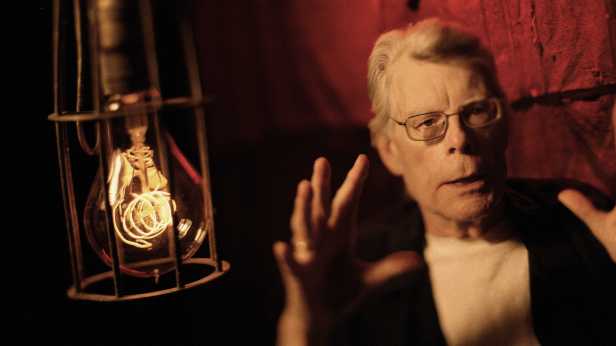
In Chapter Four, no less than Stephen King, the master of horror himself, sits before Philippe’s camera, describing the lasting impact “The Texas Chain Saw Massacre” had on him when he saw it not long after putting his finishing touches on his debut novel “Carrie” (1974). To the tune of the nervy score by Jon Hegel (“Kim Novak’s Vertigo”), King, a lifelong horror film buff, producer and sometime actor, compares Hooper’s film to such landmarks as Robert Wise’s “The Haunting” (1963), George Romero’s “Night of the Living Dead” (1968), William Friedkin’s “The Exorcist” (1973) and Daniel Myrick and Eduardo Sanchez’s diabolically ingenious “found footage” effort “The Blair Witch Project” (1999) in terms of films that “get under your skin,” says King. He should know.
Finally, in the fifth outing, filmmaker Karyn Kusama (“Girlfight”) assures us that “The Texas Chain Saw Massacre” is an “American masterpiece” featuring a “nightmare family” of former slaughterhouse workers, whose livelihood has been taken away.” She mentions the frequent shots of the sun and moon, giving the film a timeless, cosmic vibe, and the “cannibal art” throughout the house in which Leatherface has a space with a sliding metal door where he butchers his victims. She, too, speaks of Hooper’s “poetic visual language.” Many of the commentators remark about the condition of the print they first saw, usually because celluloid films, which were often heavily shown, deteriorated and faded over time back then. I first saw “The Texas Chain Saw Massacre” at a New Jersey drive-in a few miles from New York City. It’s no wonder that Steven Spielberg, who owns a (I’m sure pristine) 35mm print of the film, hired Hooper to direct his production of “Poltergeist” (1982), another classic that gets under your skin. Did I say skin?
‘Chain Reactions’
Rating: Not rated, extreme violence, profanity, mature themes
Cast: A documentary featuring Patton Oswalt, Takashi Miike, Stephen King, Karyn Kusama
Director/writer: Alexandre O. Philippe
Running Time: 103 minutes
Where to Watch: Coolidge Corner Theater
Grade: A-
 Boston Movie News